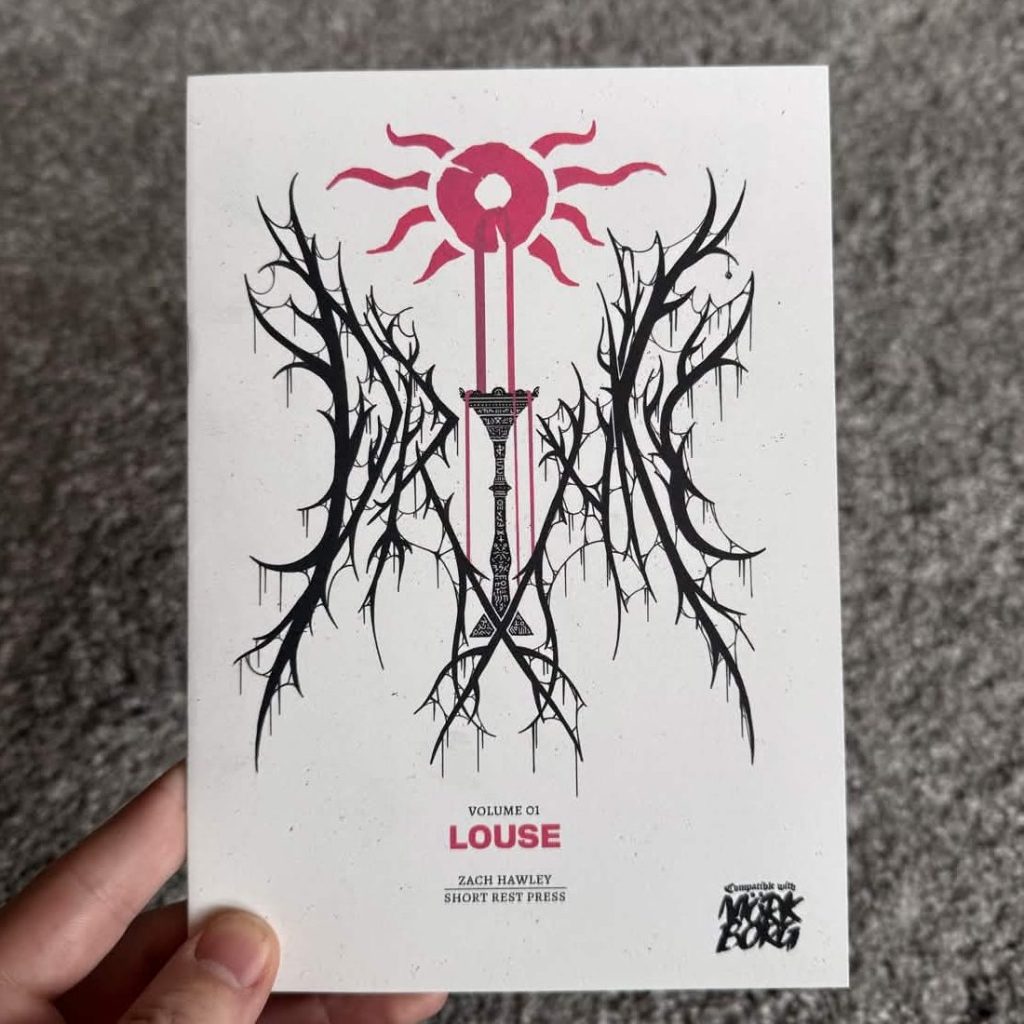
I wanted to bring something to Adepticon. Something to share and show how much the miniatures, indie, and more specifically the 28 scene (movement?) means to people like me.
And I like to make RPGs, so it was time to make a zine.
Thirty days for twenty-some pages. Thirty days to write, layout, make the art, print, and assemble. I had a deadline. I had a vague scope for the project. Time to get to work.
But I have this problem. When I get to writing, I just keep going. Small projects turn to medium projects, turn to big projects, turn to projects that never get finished. It kind of works when you’re running a campaign, but hosting a game and completing a publishable work are very different things. Which is why events like the One-Page RPG Jam are so important to people that don’t know how to put a lid on it. If you ever find yourself starting and never completing projects, give it a go. Make something, ship it, then take what you learned and apply it to the next thing.
I’ve been writing for Mork Borg since November, and in that time I’d developed an idea for a great sunken wall that I could create and release pieces of individually. A subterranean anthology series that could be placed into any ongoing game or be the sole focus of an entire campaign as more modules would be released. A big project made up of a bunch of small ones. I wrote the first dungeon crawl. Then I wrote an exploration module. Both felt like they were floating without anything to anchor them. I needed a starting point, so then I got to writing Louse.
Okay, here we are at the thirty-days-from-Adepticon mark. I’ve got all this stuff ahead of me. I needed something small to get the ball moving. So now Louse is a hamlet—tiny—only four or so buildings. Why? It’s all that I have time to make, but because of that it’s now a ruinous little village where only desperate outcasts gather to raid the nearby dungeon. The constraints of the project made the project. I would’ve written too many buildings with too many characters, and the memorable ones would’ve gotten lost in the masses. We’ve achieved focus!
The function of the book also helps with focus. Everything to run a location or encounter needs to fit on a single spread if not a single page. The manuscript needs to be razor sharp and everything needs to be necessary. But “necessary” in a fiction-forward game is rather subjective. I want to relieve anyone who runs my games of having to do the heavy lifting, and I believe there is a design trend that leans a little too light when it comes to descriptions and motivations. There won’t be any rooms with d4 skeletons twiddling their thumbs in my games. It’s a style that works well for a few extraordinary game runners, but often falls flat. So I need to give myself a couple of rules. There can’t be any run-on walls of text or lengthy descriptions, it should be easy to reference at a glance, but still needs to feel fleshed out and alive. The limitations of the project are now adding to the style of the writing!
I’m also printing this in my living room on a common inkjet printer. So now we’re limiting our palette and format. Black, white, pink, and yellow: a natural choice for a Mork Borg module. But how can the color function? Yellow highlights important information, mostly characters in this case. Pink punches up the fiction, so now a pink-purple mutating fog rolls into the hamlet. The surrounding land is alive and its dreams permeate the physical world! I do this using mold textures that I gradient map and give a chopped paper-cut look to. Simple and quick to make, gives a distinct look, while adding an interesting element to the module’s fiction. Strong choices coming out of the constraints.
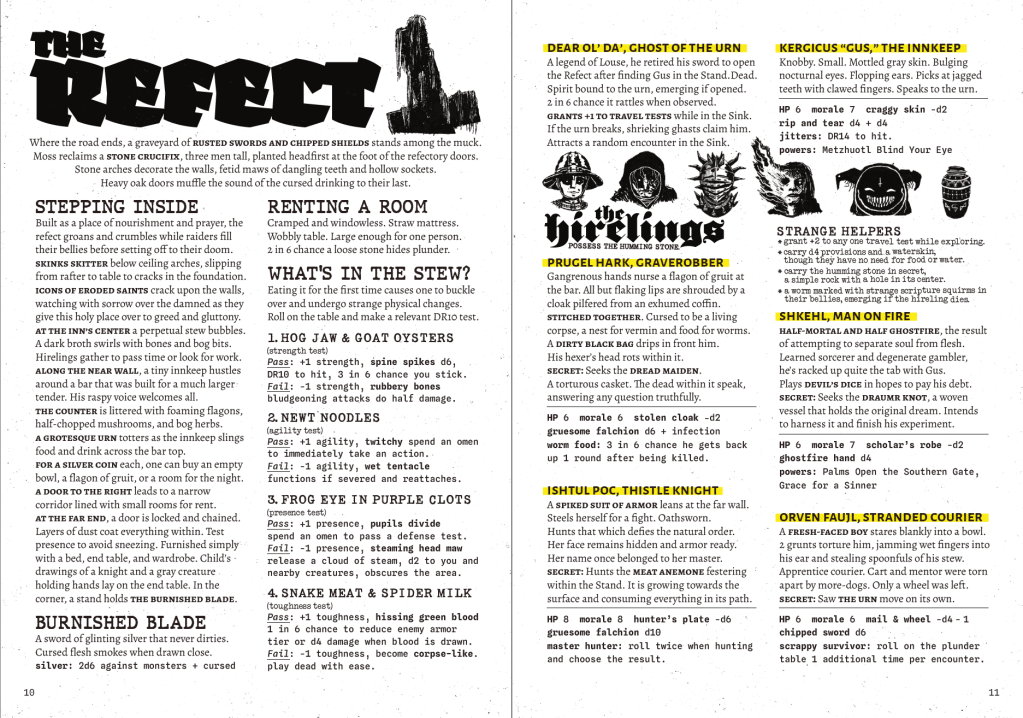
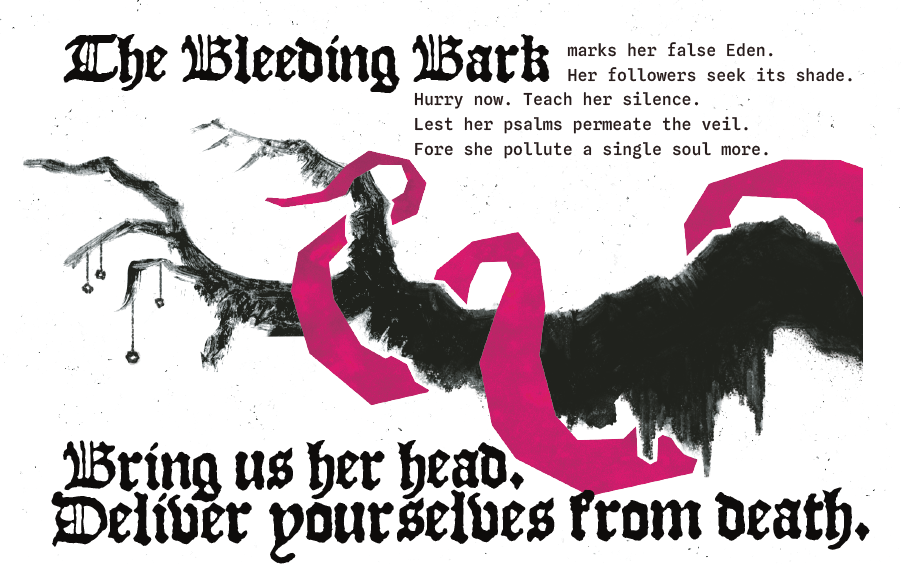
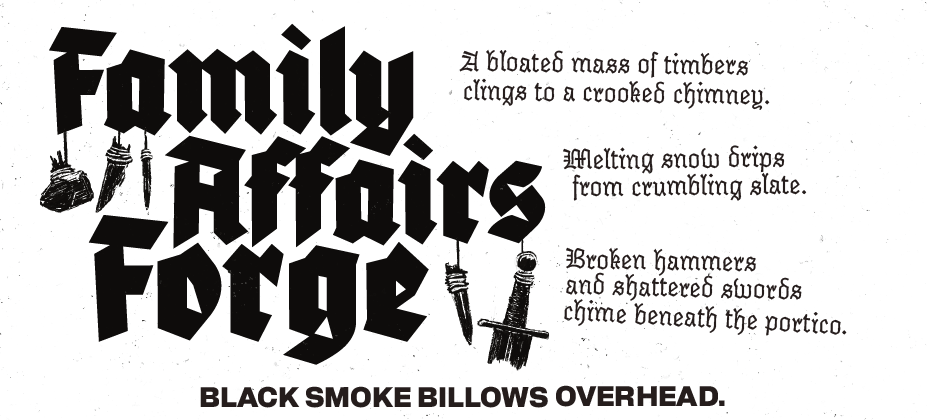
My printer can only handle up to letter sized paper. Plus I don’t even like full letter or A4 sized books, they’re too damn big! And true half-letter booklets are too tall in my opinion, so I cut a bit off the top and bottom. This further shrinks the amount of space on each page and adds more time to assembly. But I’m willing to bite the bullet on this one, and I think it was completely worth it. I also can’t reliably print from edge to edge or span across the gutter except for the center sheet. Nor do I have the time to do full pages of art! So small bits of spot art that interact and play with the text. Nothing flashy, just stuff that works in unison with the manuscript and layout.
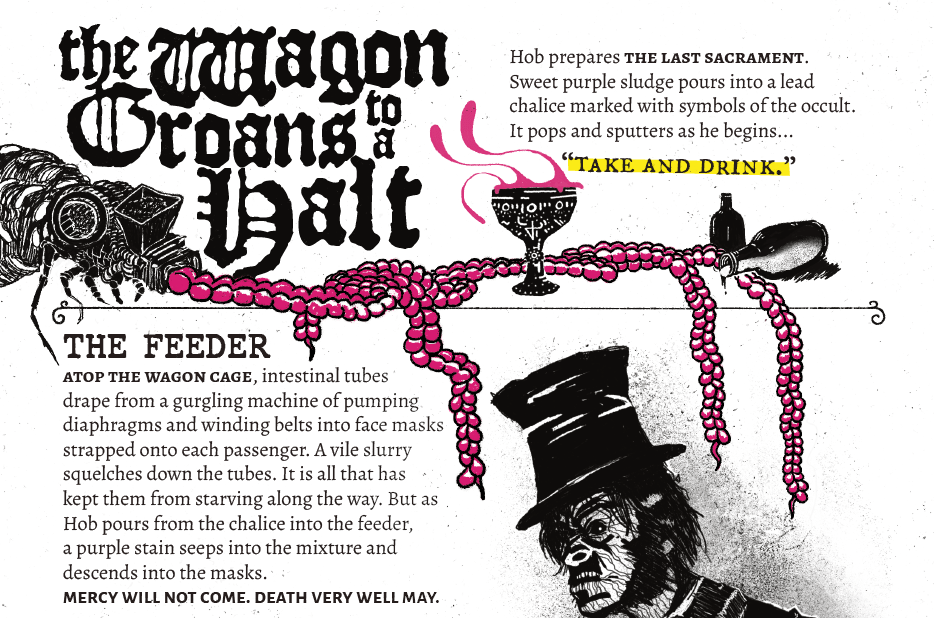
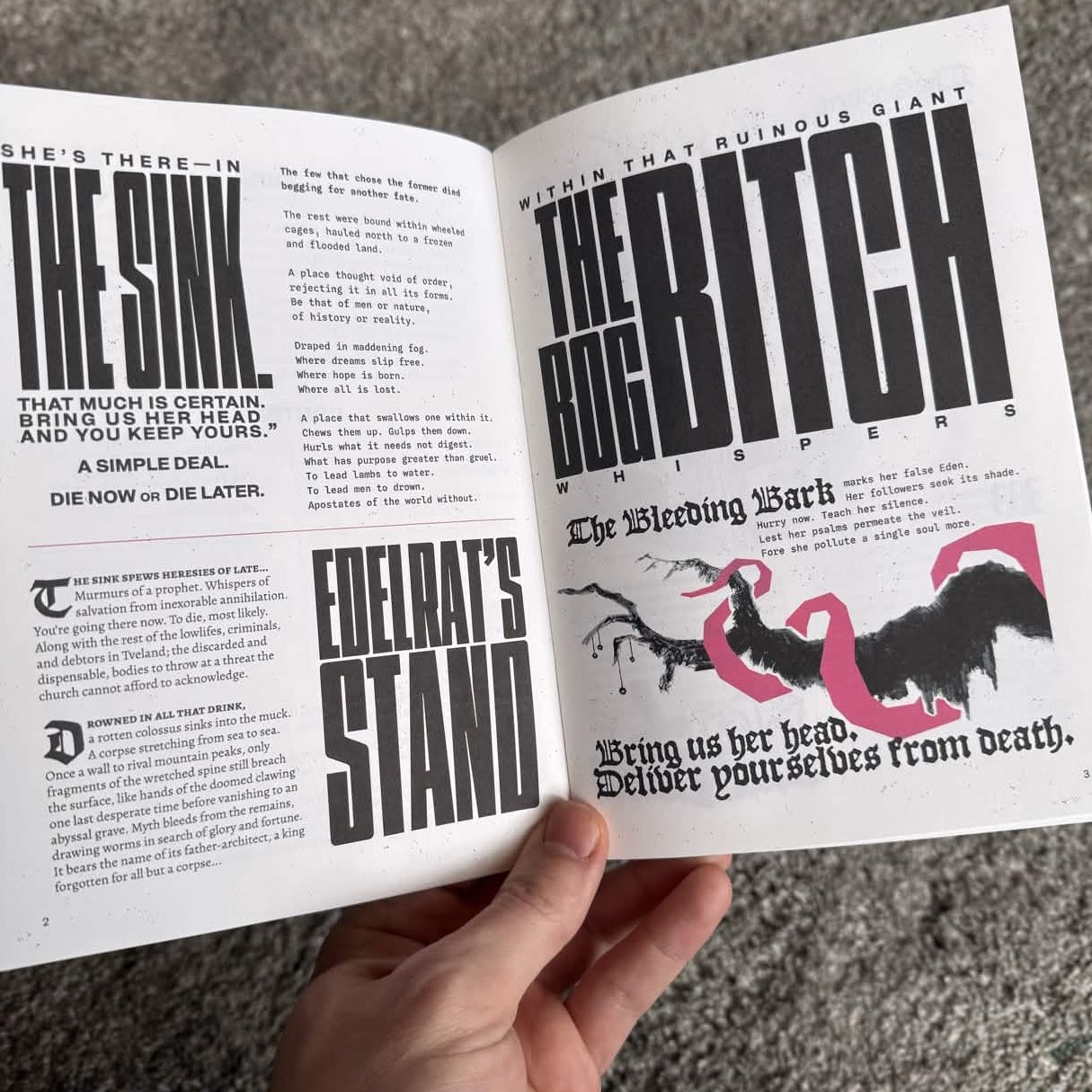
I’m printing often throughout the development process. Something I’ll definitely be doing for my work going forward. This needs to work as a physical object and read well when put to paper. I’m also showing the early versions to people. Which truly sucks when something is unfinished, but the discomfort stirs my brain into seeing all the things that currently aren’t working. It’s also teaching me how the final assembly will go and what tools I’m missing. Much was learned by doing this.
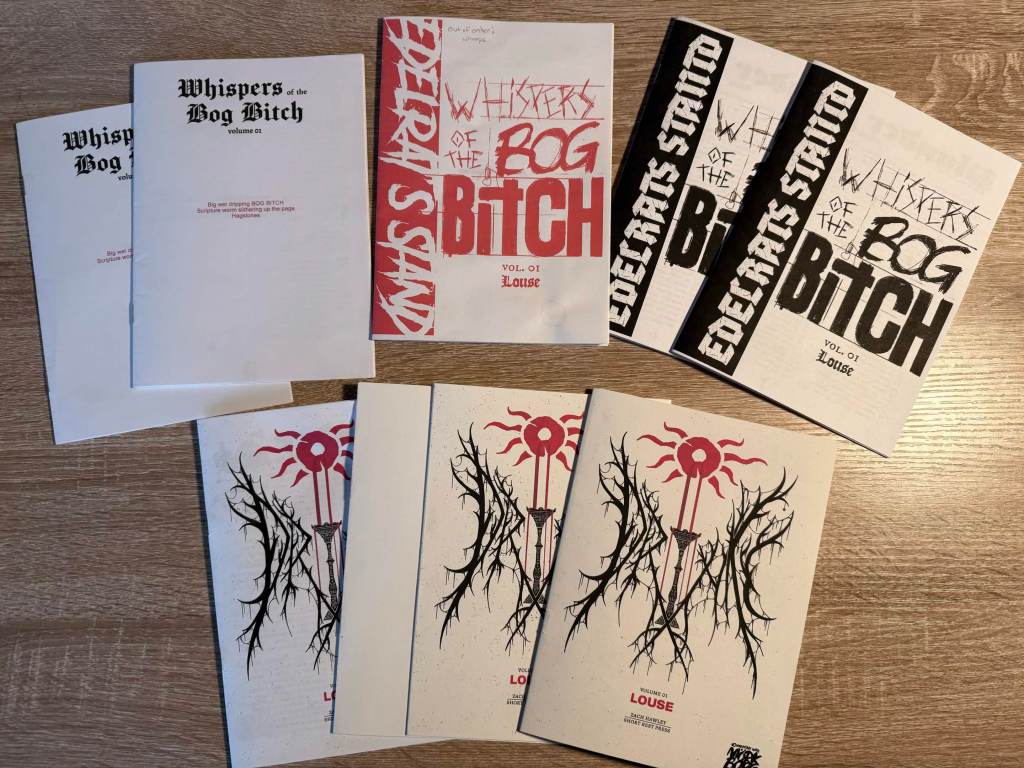
I didn’t want this to look like it was printed in a living room on a normal printer. So I researched and ordered some fancy paper (shout out French Paper Co.) in two varieties; a nice 70lb text for my interior pages, and an 80lb cardstock to make the cover more substantial. I got a rotary paper trimmer, scored all the pages by hand, and used a saddle stapler to bind this thing together right at the fold. Pretty simple tools that take a little practice, but made the final product something I’m really happy with. We only had a few things to work with, but we made it work!
Let’s wrap it up. MAKE YOUR THING! Just actually make it! Break it into smaller chunks if you have to. Do it with what you have on hand. Check out your library if you don’t have access to these things. MAKE A DEADLINE! Tell someone about it. Be accountable. Thirty days is admittedly absurd, but put a date on the calendar! You don’t need anyone’s permission and you certainly aren’t getting anywhere by waiting for that moment of inspiration to strike. That moment comes after you’ve already started moving. When you’re in the thick of it.
Go to conventions! Organize local events! Meet people in person! Don’t create in a vacuum!
Thanks to everyone that I met at Adepticon for your kindness and motivation. It means the world.
 Short Rest Press
Leave a comment