That’s kind of my mantra these days. All-out. Whole-ass. Just do the dang thing. I spent thirty years overthinking to never finish anything. Now it’s go-time. Let’s make stuff. Let’s put it out there.
The mantra encompasses the kind of games I enjoy and want to make. Games that encourage action over planning. Games that get to the table within days instead of weeks.
How do we make a game that rips? Let’s sketch it out with three bullet points.
- Situations should be resolved in a few big decisions instead of a dozen tiny ones. Combats should be full of big swings and bigger blunders. No deaths by a thousand cuts, we kill with flails to the face.
- Rules that encourage environmental interaction and creative decision making, while also being a breeze to implement. Big fun moves should bolster the momentum, not bring things to a grinding halt. So simple procedures that allow us to make rulings on the fly, got it.
- Use negative space to do more with less. Scripts are for screenplays, we don’t need or want canned scenes. The game’s host should be discovering things in the moment along with the players. Locations will have some key characters with a few quirks, a handful of suggestive but not explicit details, and interesting things to infer instead of stating direct connections between.
Those are our goals, let’s see how we can knock them out with the dice system for FRINK!
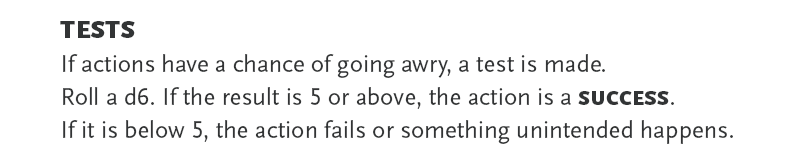
It’s really quite simple. Players roll d6s when faced with challenging situations, succeeding on rolls of five or higher. Rolls use one die by default, but players add dice with advantages. Advantages can be anything. Some of them are built into the character traits; uniquely spliced DNA and talents granted by their prior life. If they can describe how these traits help them in their current situation, they add a die for each one. Advantages can also come from using good tactics or interactions; slicking the floor with a knocked vat of oil or dropping down on an enemy from above. These are applied exactly as the traits are, one die for each advantage.
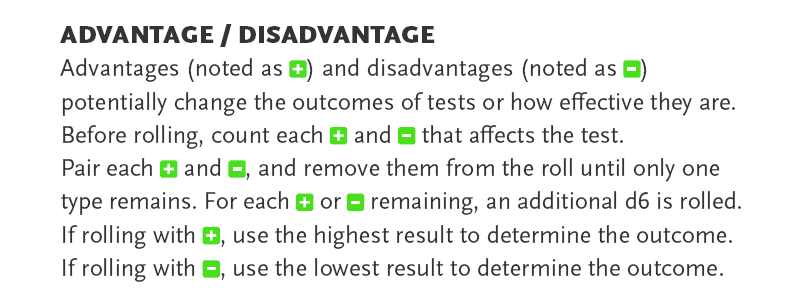
Cool, that’s pretty easy but still pretty interesting. We’re just looking for fives or higher, we can remember that. And basically anything we can utilize in the environment to help us out adds a die to the roll, increasing our odds of success while also adding interesting details to the action. Neat.
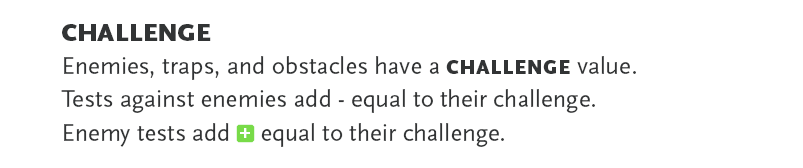
Okay but these are challenges, so how does a host make things harder or more imposing to the players? With disadvantages of course. Similar to their counterpart, disadvantages remove dice from the roll. If the amount of dice dips negative, the lowest result is used to determine the outcome. Each trap, creature, and obstacle has a challenge rating. This adds an equal amount of disadvantages to the roll. And like advantages, enemy tactics and situational elements can impose additional disadvantages.
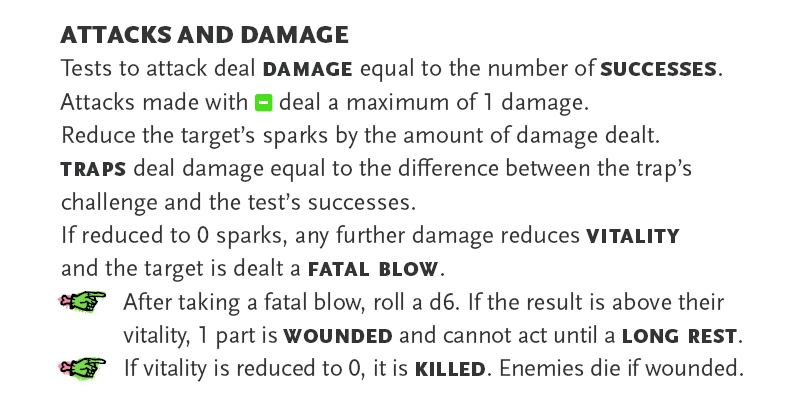
That’s the very basics of the resolution system. Adding dice, subtracting dice, and looking for fives or higher. Does it accomplish our goals?
- Players are adding function to the rolls by adding flavor, making for some pretty big moments without taking a lot of time to do it. Traps and obstacles can be navigated in a single action or roll, but they have to take a big swing in order to do it.
- There’s a few reliable ways to get advantages on the character sheet, and built-in moves that spend resources to gain them as well, but high enough challenges will encourage players to think of things in the moment and away from their sheets in order to succeed.
- The traits suggest but do not describe their effects. They’re not specific keys to specific locks. I have a bear arm. Bears are good climbers, have leathery skin, fur for insulation, and claws for tearing. That’s a lot of things a bear arm can do, but all we have written down is “bear”. There are a lot of things left unsaid that allow a simple trait to be widely applicable. At the same time, fur is also flammable and bears aren’t very small, so maybe it imposes disadvantages in certain situations. All of this can quickly be applied and resolved just by giving advantages or disadvantages.
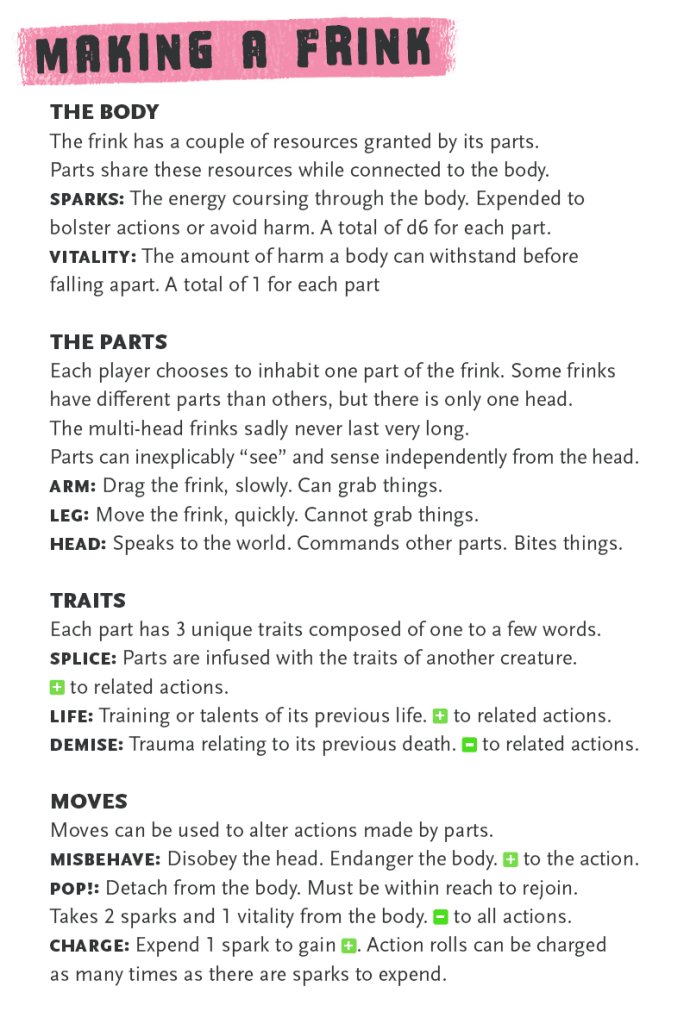
I think we’ve cooked up something big and fun that doesn’t sacrifice flavor for efficiency. Have we reinvented any existing wheels? You betcha we did. There are a ton of dice pool systems out there that do very similar things. And that’s okay! Iteration is how progress is made. And if not progress, at least something gets made.
Maybe I’ll call it RIP SIX, or SICK D6, or FORGED IN THE RIP. INTO THE RIP. RIP CRUSADE. BIG RIPS. THE MCRIP IS BACK.
Enough of that. I’d like to revisit FRINK! at some point. Let the game breathe a little bit and clarify things I feel demand a bit more page space. Though constraining everything to one page is a great exercise. For those that tend to overwrite like myself, I think it’s a great way to learn how to be more concise.
So maybe a FRINK! zine exists sometime in the future. For now I’m continuing to chip along on volume two of Drink along with several other projects.
Hope you’re all well and thanks for reading. If you ever GO KILL YOUR DAD, I’d like to hear about it.
Cheers.


Leave a comment